How Can AI UGC Ads Make Brand Campaigns Feel More Authentic?
Can brands create advertising that feels personal, relatable, and authentic without spending weeks producing new content? AI UGC ads are emerging as a practical way to combine the familiar style of user-generated content with artificial intelligence-assisted creative production.
In simple terms, AI can help marketers develop UGC-style videos, scripts, product demonstrations, testimonials, social media concepts, and creative variations more efficiently. The goal is not simply to produce more advertisements. It is to create content that feels relevant to specific audiences while allowing marketing teams to test and refine ideas at scale.
For brands competing for attention across crowded social platforms, this combination of authenticity and production efficiency can be particularly valuable.
Why are UGC ads effective for modern brands?
***[AI UGC ads](https://adsgpt.io/blog/successful-ads-by-testing-their-hook/
)*** often perform well because they can resemble the content audiences already consume on social media. Instead of looking like polished corporate commercials, they can use conversational language, demonstrations, reviews, personal experiences, and problem-solution storytelling.
Several characteristics can make this format engaging:
* Relatable storytelling: The message can focus on everyday customer problems.
* Natural presentation: Casual formats may feel less promotional.
* Product demonstrations: Viewers can see how a product works in practical situations.
* Social proof: Customer experiences can help reduce uncertainty.
* Creative flexibility: Different hooks and formats can be adapted for different audiences.
The strongest UGC-style campaigns usually prioritize a clear customer benefit rather than simply imitating the appearance of organic social content.
What are AI-powered UGC advertisements?
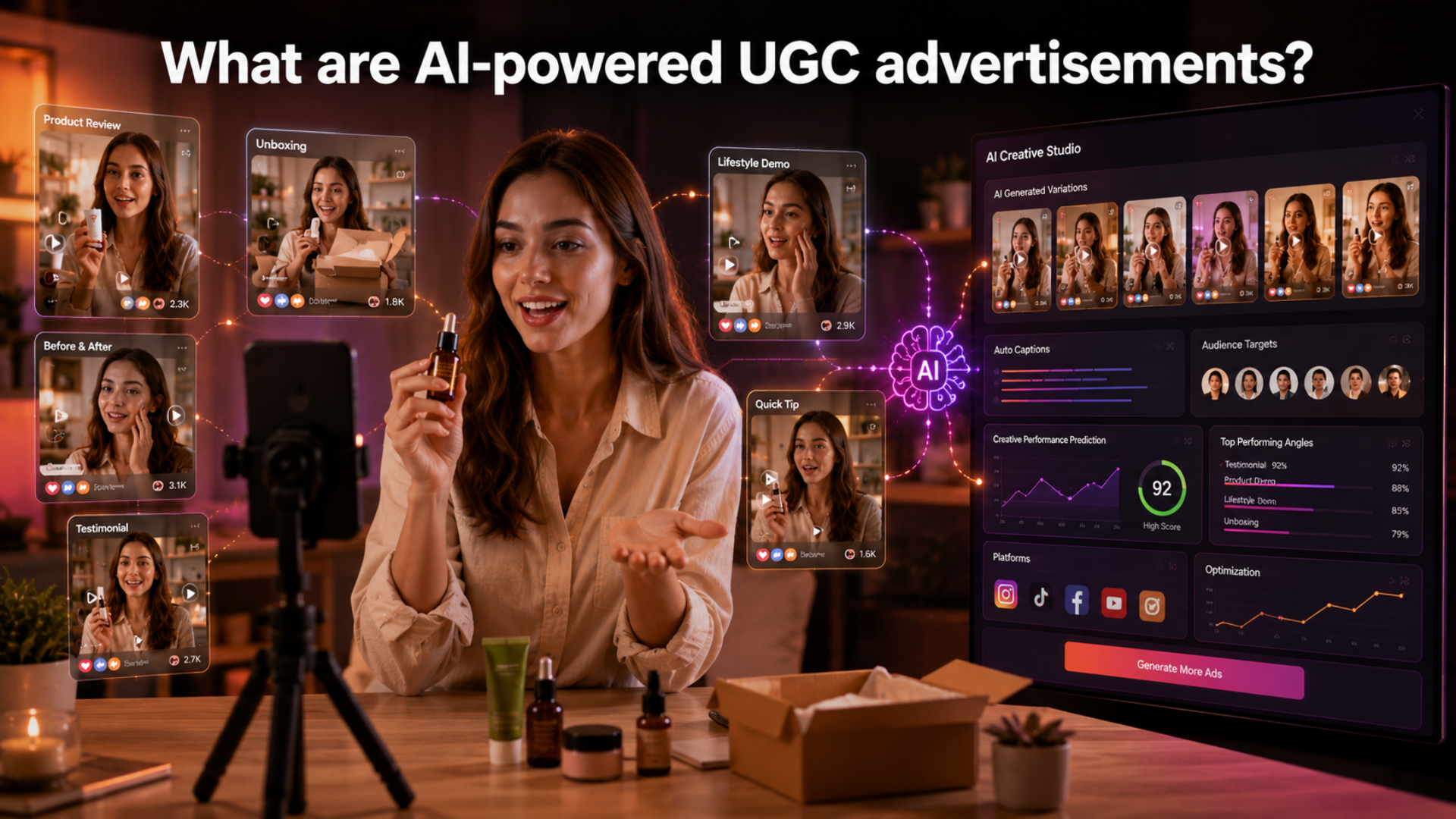
User-generated content traditionally comes from customers or creators who share their experiences with a product or service. It often works because the presentation feels less formal than traditional brand advertising.
AI-assisted UGC production can recreate some of those characteristics through digitally generated scripts, presenters, voices, visual concepts, editing workflows, and personalized creative variations.
However, businesses should be transparent when content is artificially generated or significantly modified. Authenticity is valuable only when audiences can trust the message.
How can AI help create UGC-style content?
Artificial intelligence can support several stages of creative production without requiring marketers to manually complete every repetitive task.
Script development
AI can generate initial scripts based on a product's features, target audience, pain points, and campaign objective. Marketers can then edit these drafts to ensure the language sounds natural and accurately represents the product.
Creative variations
One campaign concept can be adapted into multiple versions. A brand might create separate variations focused on convenience, affordability, performance, ease of use, or a particular customer problem.
Visual production
AI-assisted tools can help create backgrounds, product scenes, visual compositions, captions, and other creative components. This can reduce production time when teams need many variations.
Faster experimentation
Instead of investing heavily in one creative concept, marketers can develop several variations and identify which messaging deserves additional attention.
How can marketers use AI in marketing without losing human creativity?
The expanding role of ***[AI in marketing](https://medium.com/@AdGenie/ai-in-marketing-how-smart-technology-is-transforming-brand-communication-5d151d4309dd
)*** does not mean that marketers should hand over every creative decision to automated systems. AI is most useful when it handles repetitive production and analysis while people remain responsible for strategy and judgment.
A balanced workflow might look like this:
Research → Creative concept → AI-assisted production → Human review → Audience testing → Performance analysis → Creative refinement
This approach allows technology to accelerate production while keeping the brand's creative direction under human control.
Marketers should also establish clear rules around brand voice, customer privacy, factual claims, intellectual property, disclosure, and acceptable AI-generated content before scaling production.
How can brands maintain authenticity with AI-generated content?
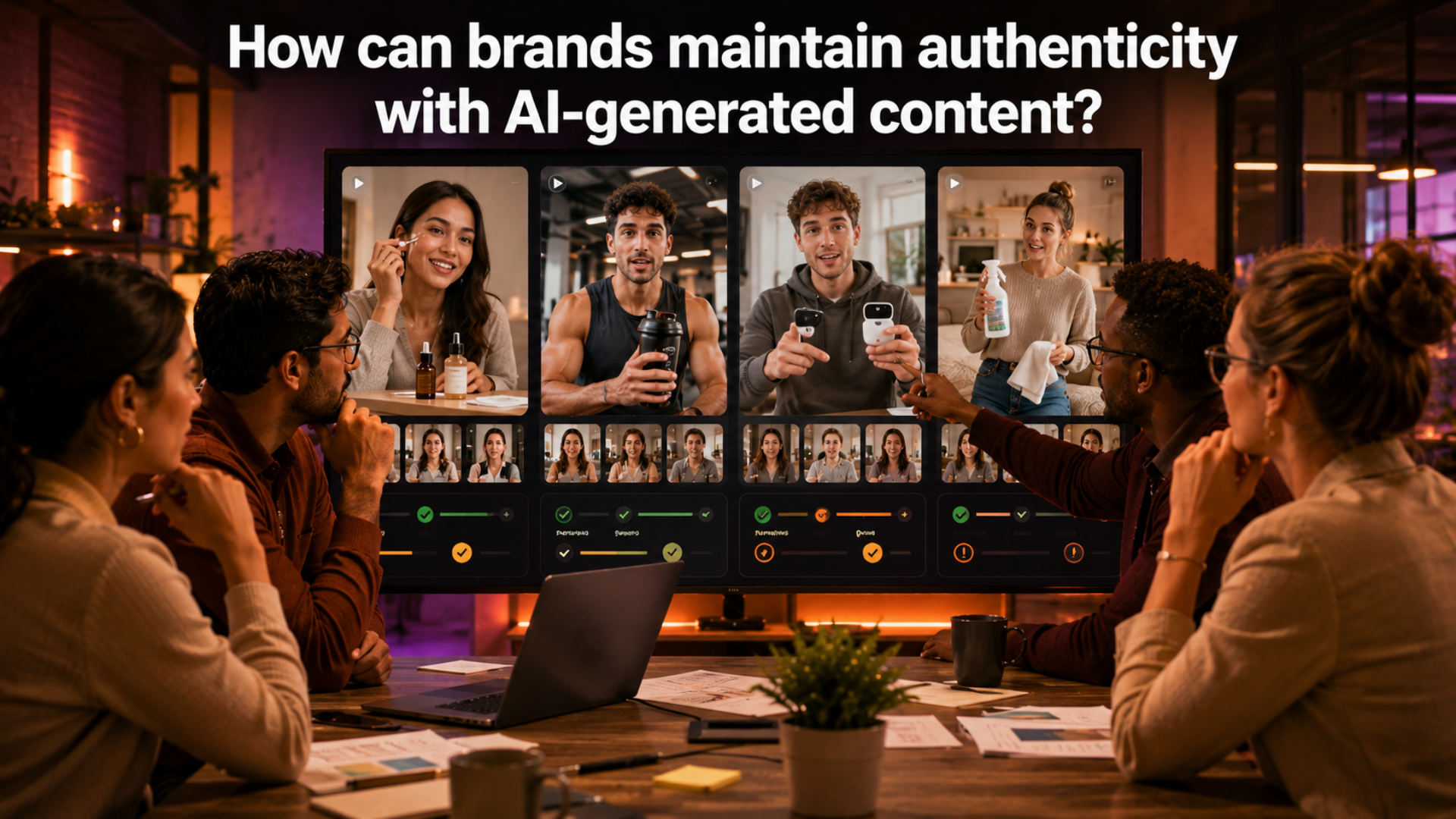
Efficiency should never come at the expense of credibility. Audiences are increasingly capable of recognizing artificial or overly scripted content, particularly when it feels repetitive or unnatural.
Brands can improve authenticity by:
1. Using conversational language rather than exaggerated marketing claims.
2. Including genuine product information and realistic demonstrations.
3. Avoiding fabricated customer experiences presented as real testimonials.
4. Reviewing AI-generated scripts before publishing.
5. Maintaining consistent brand values and communication standards.
6. Disclosing synthetic or digitally generated elements when appropriate.
Human review remains essential because AI can produce content that sounds convincing while containing inaccurate claims or inappropriate messaging.
How does AI support audience personalization?
Different customers can respond to completely different motivations. A first-time buyer may need reassurance, while an experienced customer may care more about advanced features.
AI can help marketers develop creative variations around these different motivations. The same product can therefore be introduced through several storytelling approaches without requiring a completely separate production process for every audience.
This becomes particularly useful when campaigns operate across multiple platforms. Short-form video, social advertisements, landing-page content, and promotional messages can each be adapted while preserving the central campaign idea.
Why could AI-powered UGC become an important advertising format?
Digital audiences increasingly expect advertising to be relevant, fast-moving, and native to the platforms where they spend their time. AI can help brands respond to those expectations by reducing creative production bottlenecks and making experimentation more accessible.
***[UGC ads](https://adsgpt.io/blog/how-ugc-style-video-ads-increased-coversions/
)*** can be particularly effective when they combine efficient production with genuine storytelling, accurate product information, thoughtful personalization, and transparent communication.
The real opportunity is not replacing human creativity. It is giving creative and marketing teams more ways to turn strong ideas into useful, audience-focused campaigns.
What metrics should brands track?
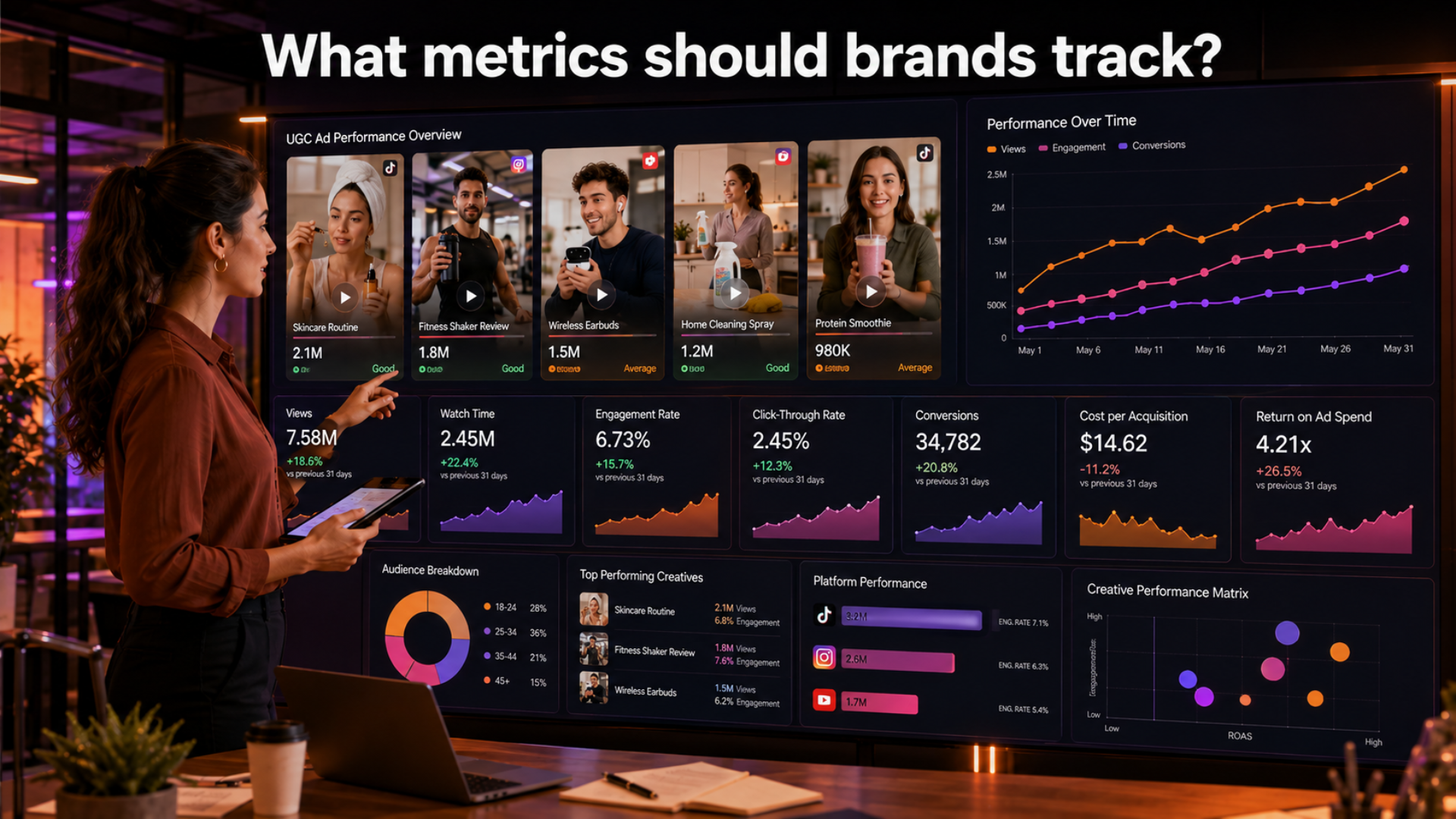
Producing more creativity does not automatically produce better advertising. Campaign performance should be evaluated using metrics that reflect the actual business objective.
Important indicators can include:
* Video completion rate
* Engagement rate
* Click-through rate
* Conversion rate
* Cost per acquisition
* Return on advertising spend
* Landing-page conversion
* Customer retention or repeat purchases
Creative performance should also be evaluated over time. A concept that generates strong initial engagement may become less effective when audiences repeatedly encounter similar content.
What are the challenges of AI-powered UGC campaigns?
Despite its advantages, this approach introduces several potential problems.
Lack of authenticity: Artificially generated content can feel generic when it lacks genuine human perspective.
Repetitive creative: Producing hundreds of variations can create superficial differences without meaningful improvement.
Incorrect claims: AI-generated scripts may contain statements that require verification.
Trust concerns: Audiences may react negatively if synthetic content is presented deceptively.
Brand inconsistency: Poorly controlled generation can produce different tones, visual styles, or messages across campaigns.
These challenges make editorial oversight just as important as production speed.
You can also watch: ***[Stop Wasting Your Ad Budget!](https://youtu.be/F9hRKDOz43A?si=4XxBUm_nPNPeYe2S
)***
Summary
***[AI UGC ads](https://adsgpt.io/blog/successful-ads-by-testing-their-hook/
)*** can help brands produce relatable creative content faster, develop more variations, and experiment with different audience messages. Its effectiveness depends on more than automation: authenticity, transparency, accurate claims, human review, and meaningful performance measurement remain essential.
Frequently Asked Questions
What are AI UGC ads?
They are UGC-style advertisements created or enhanced with artificial intelligence, including assistance with scripts, visuals, presenters, editing, and creative variations.
Are AI-generated UGC ads effective?
They can be effective when they provide relevant messaging, realistic product information, strong storytelling, and appropriate audience targeting.
Can AI completely replace UGC creators?
AI can automate parts of content production, but genuine creators can provide personal experiences and perspectives that synthetic content cannot authentically reproduce.
Should brands disclose AI-generated content?
Brands should follow applicable platform rules, advertising standards, and disclosure requirements, particularly when synthetic content could reasonably mislead viewers about its origin.
How can marketers improve AI-generated UGC?
Use human editing, realistic storytelling, accurate product claims, audience-specific messaging, and ongoing performance testing.