# **How Is AI Ad Autopilot Used in Modern Digital Advertising Workflows?**
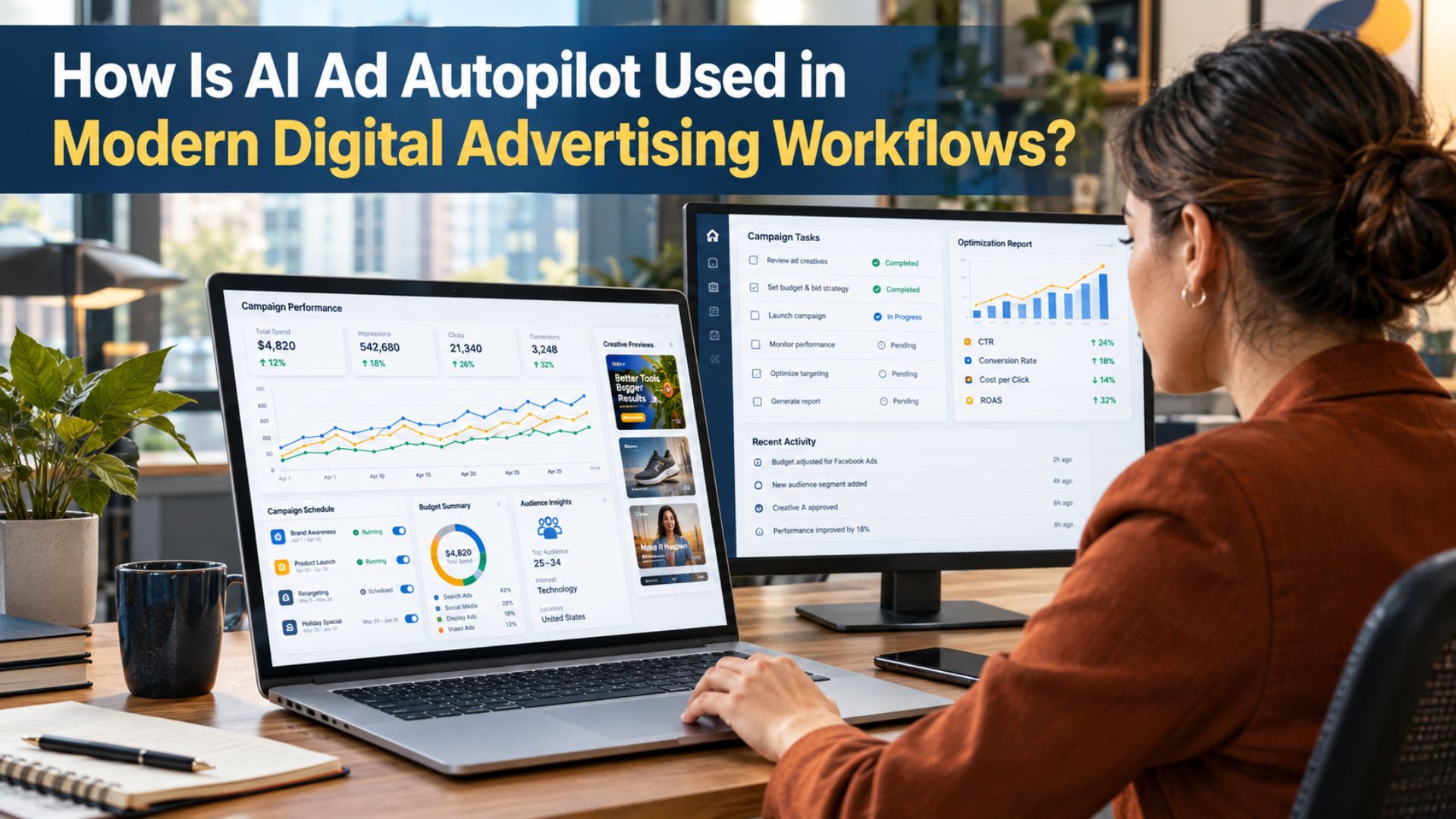
Digital advertising requires marketers to manage campaign planning, creative production, audience targeting, budget allocation, and performance tracking across multiple platforms. As advertising operations become more complex, businesses increasingly rely on automation to simplify repetitive tasks and improve workflow efficiency. ***[AI Ad Autopilot](https://adsgpt.io/blog/ai-ad-autopilot-the-brand-risk-no-one-talks-about/)*** supports this shift by helping teams coordinate campaign activities, analyze performance signals, and streamline routine advertising decisions. Rather than handling every adjustment manually, marketers can use automated systems to organize campaign data, identify optimization opportunities, and maintain consistent advertising operations. These capabilities allow teams to spend more time developing strategies, understanding customers, and evaluating the broader impact of their campaigns.
# Campaign Planning and Workflow Automation
Campaign planning involves several connected activities, including defining objectives, selecting audiences, preparing creative assets, establishing budgets, and scheduling advertisements. Managing these responsibilities manually can become difficult when a business operates campaigns across several platforms. Automation helps organize these activities into a more structured workflow. Advertising teams can use automated systems to arrange campaign tasks, establish schedules, monitor launch requirements, and coordinate approvals. For example, a marketing department preparing a seasonal promotion might organize audience research, creative development, budget allocation, and campaign publication through one connected process. This reduces the need to manage every task separately. Automation can also help teams maintain consistent campaign procedures. Standardized workflows make it easier to check whether advertisements meet brand guidelines, landing pages are ready, and tracking systems are configured correctly before campaigns go live. These checks are particularly useful for businesses managing multiple products or promotional periods.
# Budget Management and Performance Optimization
Campaign performance changes over time as audience behavior, competition, and market conditions evolve. Advertising teams therefore need reliable methods for monitoring expenditure and identifying opportunities to improve results. Automated workflows can collect performance indicators, organize reports, and flag changes that may require attention. Common indicators include impressions, clicks, click-through rates, conversion rates, cost per acquisition, and return on advertising spend.
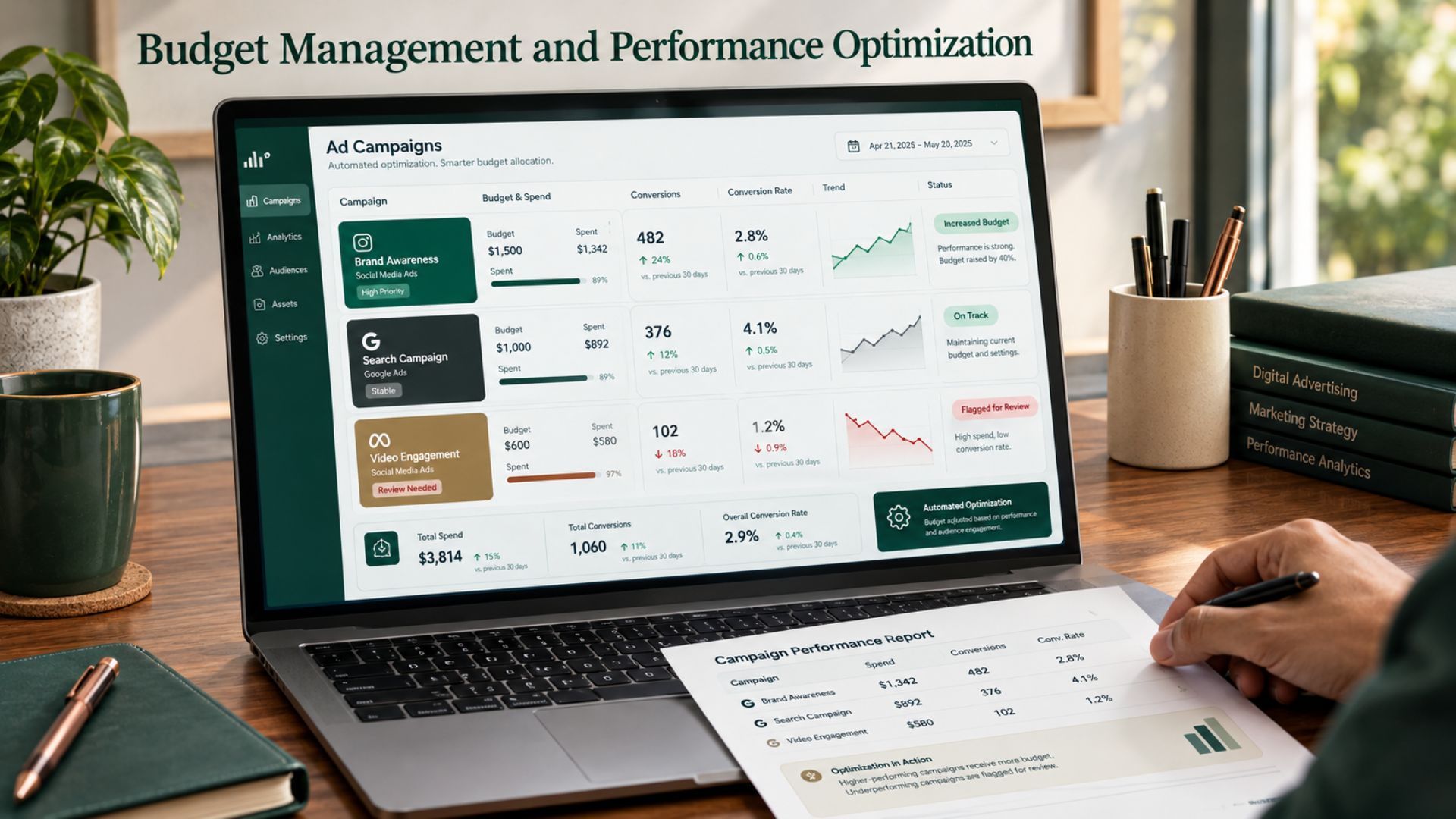
Each metric answers a different question. Click-through rates help indicate whether an advertisement attracts attention, while conversion rates reveal how effectively visits lead to desired actions. Cost and revenue measures help marketers evaluate commercial efficiency. When campaign data indicates that one advertisement is performing differently from another, an automated system may recommend adjustments to budgets, placements, or creative variations. Depending on the platform and configuration, certain changes may be executed automatically, while others require approval.
# Audience Targeting and Creative Development
Effective advertising depends on reaching suitable audiences with messages that match their interests and needs. Modern advertising systems can analyze available campaign data, such as engagement patterns, website interactions, and previous conversions, to help marketers understand audience behavior. These insights can inform segmentation and guide decisions about where advertising resources should be directed. Creative development can also benefit from automation. An ***[AI Ad Creative](https://adsgpt.io/blog/ai-ad-creative-generator-why-volume-beats-perfection/)*** workflow may help teams generate initial copy variations, explore visual concepts, adapt messages to different placements, and prepare alternative versions for testing. Marketers can then review these materials for accuracy, tone, originality, and alignment with brand identity before publication. Different audience groups may respond to different messages. A retailer, for example, could test product-focused messaging with one segment and emphasize convenience or value with another. Performance observations can help the team understand which approaches deserve further testing. Nevertheless, automated targeting should not be treated as a substitute for audience research. Data can be incomplete, outdated, or influenced by temporary behavior.
# Reporting, Integration, and Campaign Coordination
Digital advertising workflows often involve several tools for analytics, customer relationship management, creative production, scheduling, and reporting. When these systems operate independently, employees may spend considerable time transferring information and reconciling inconsistent reports. Integrations can connect relevant data and reduce these administrative burdens. For example, campaign platforms may provide delivery and engagement statistics, while website analytics reveal visitor behavior and conversion events. Connecting these information sources helps teams evaluate performance beyond the initial click. Customer relationship data may provide additional context about lead quality or subsequent purchases, provided that data is collected and used appropriately.

Automated reporting can summarize campaign results, highlight changes against targets, and distribute updates to relevant stakeholders. Teams can use these summaries to identify underperforming placements, compare creative variations, and determine which experiments should continue. These reports also create a clearer record of decisions and outcomes. The use of ***[AI Ads](https://hedgedoc.ludos-disciplinarum-misi.fyi/s/kG7lNVqW4)*** across different platforms can increase the importance of consistent measurement and coordination. Teams should verify that tracking definitions, attribution settings, and reporting periods are comparable before drawing conclusions. Integrated systems improve visibility, but reliable decisions still depend on accurate data, suitable measurement methods, and clear communication between marketing, analytics, and creative teams.
You can also watch: ***[Generate Professional Ad Campaigns in Minutes | AdsGPT AdFactory Demo](https://youtu.be/7aIIF5R1uY4?si=h_EwKHvpddCFITK8)***
# Conclusion
Modern advertising workflows increasingly combine automation, analytics, and human decision-making to manage campaigns more efficiently. From planning and creative development to budget monitoring and reporting, connected processes help marketing teams reduce repetitive work and respond more systematically to campaign performance. ***[AI Ad Autopilot](https://adsgpt.io/blog/ai-ad-autopilot-the-brand-risk-no-one-talks-about/)*** can support these activities by organizing information, highlighting optimization opportunities, and coordinating selected tasks across advertising operations. Its effectiveness depends on clear objectives, trustworthy data, appropriate safeguards, and regular performance reviews. Businesses that balance automated capabilities with human expertise can build more organized advertising workflows while retaining control over brand messaging, spending decisions, and long-term marketing strategy.
# FAQs
**1. How does AI Ad Autopilot help manage digital advertising campaigns?**
It helps organize campaign tasks, monitor performance, coordinate creative assets, and support optimization decisions, reducing repetitive manual work.
**2. Can AI automate advertising budget optimization?**
Yes. Depending on the platform and settings, automation can adjust budgets or recommend changes based on performance data, spending limits, and campaign objectives.
**3. How does AI improve advertising creative development?**
AI tools can help generate copy variations, explore visual concepts, adapt advertisements for different placements, and support creative testing. Human review remains important for accuracy and brand consistency.