# Cloud Call Center: How It Works, Key Benefits, and Business Applications
How can businesses manage customer calls efficiently, support remote teams, and reduce communication costs? A ***[Cloud Call Center](https://callified.ai/blog/the-complete-guide-cloud-call-centers/)*** provides a practical solution by moving calling operations to an internet-based platform. Instead of investing heavily in on-site equipment, businesses can manage customer interactions through cloud-hosted software accessible from different locations.
These platforms combine calling tools, call routing, reporting, integrations, and automation to streamline communication. They help businesses improve service quality, monitor performance, and adapt their operations as customer demand changes.
**What Is a Cloud-Based Call Center and How Does It Work?**
A cloud-based call center is a communication system hosted on remote servers that enables businesses to manage incoming and outgoing calls over the internet. Employees can access calling tools, customer information, and performance reports through a web-based dashboard or compatible application.
The system generally works through the following steps:
* Call initiation: A customer contacts the business, or an employee starts an outbound call.
* Call routing: The system directs the interaction to the appropriate department or available representative.
* Customer interaction: Employees access relevant information and communicate with the customer.
* Call tracking: The platform records permitted call details and relevant performance metrics.
* Reporting and follow-up: Managers review outcomes and organize subsequent actions.
This connected process helps businesses manage communication more consistently while reducing repetitive administrative tasks.
What Are the Key Features of Cloud Calling Software?
The right platform combines essential communication tools with features that support everyday business operations.
**Intelligent Call Routing**
Call routing directs incoming calls according to predefined rules, such as employee availability, department, language, or customer requirements. This reduces unnecessary transfers and helps callers reach the appropriate team.
**Automatic Call Distribution**
Automatic call distribution shares incoming calls among available employees. It can balance workloads, reduce waiting times, and help teams handle fluctuating call volumes more efficiently.
**Call Recording and Analytics**
Where legally permitted, call recording supports quality reviews, employee training, and service improvement. Analytics can track missed calls, average handling time, resolution rates, and overall performance.
**CRM Integration**
CRM integration connects calling activities with customer records. Employees can review previous interactions, update information, and document outcomes without switching between multiple applications.
**AI-Powered Calling and Automation**
AI-powered features can support routine conversations, automate reminders, organize call outcomes, and simplify follow-up activities. Businesses can use these capabilities to reduce repetitive work while preserving human involvement for complex customer needs.
**What Are the Benefits of Using Cloud Communication Software?**

Businesses adopt internet-based calling systems to improve flexibility, manage costs, and create more consistent customer experiences.
**Lower Infrastructure Costs**
Traditional telephone systems may require equipment purchases, installation, maintenance, and upgrades. Cloud platforms reduce dependence on physical infrastructure and commonly offer subscription-based pricing.
**Support for Remote Teams**
Authorized employees can access calling tools from different locations using compatible devices and reliable internet connections. This makes it easier to manage distributed teams and support flexible working arrangements.
**Improved Customer Experience**
Efficient routing and accessible customer information help employees respond more effectively. Customers may experience shorter waiting times, fewer transfers, and more consistent assistance.
**Better Performance Visibility**
Reporting dashboards help managers understand call volumes, response times, missed interactions, and workloads. These insights support better staffing decisions and targeted training.
**How Can Businesses Improve Sales and Customer Support?**
Cloud communication tools can support customer service, appointment scheduling, outbound sales, and lead generation. Their value increases when calling workflows are connected with customer records and clear operating procedures.
For customer support, ***[call center agents](https://callified.ai/blog/call-center-agents/)*** can use interaction histories, call notes, and routing information to provide relevant assistance. Supervisors can review performance trends and identify where additional training or process improvements are needed.
Sales teams can also use automated dialing, structured scripts, and call outcome tracking to organize outreach. These features help employees follow consistent processes, reduce manual documentation, and maintain timely communication with prospects.
For example, a sales team can organize prospects by interest, previous interactions, and stated requirements before planning follow-ups. This creates a more structured approach to outreach and helps employees focus on conversations that are relevant to each prospect.
When evaluating AI-enabled communication solutions, businesses can explore Callified AI for capabilities related to automated calling and customer interaction workflows.
**How Does Cloud Calling Support Lead Management?**
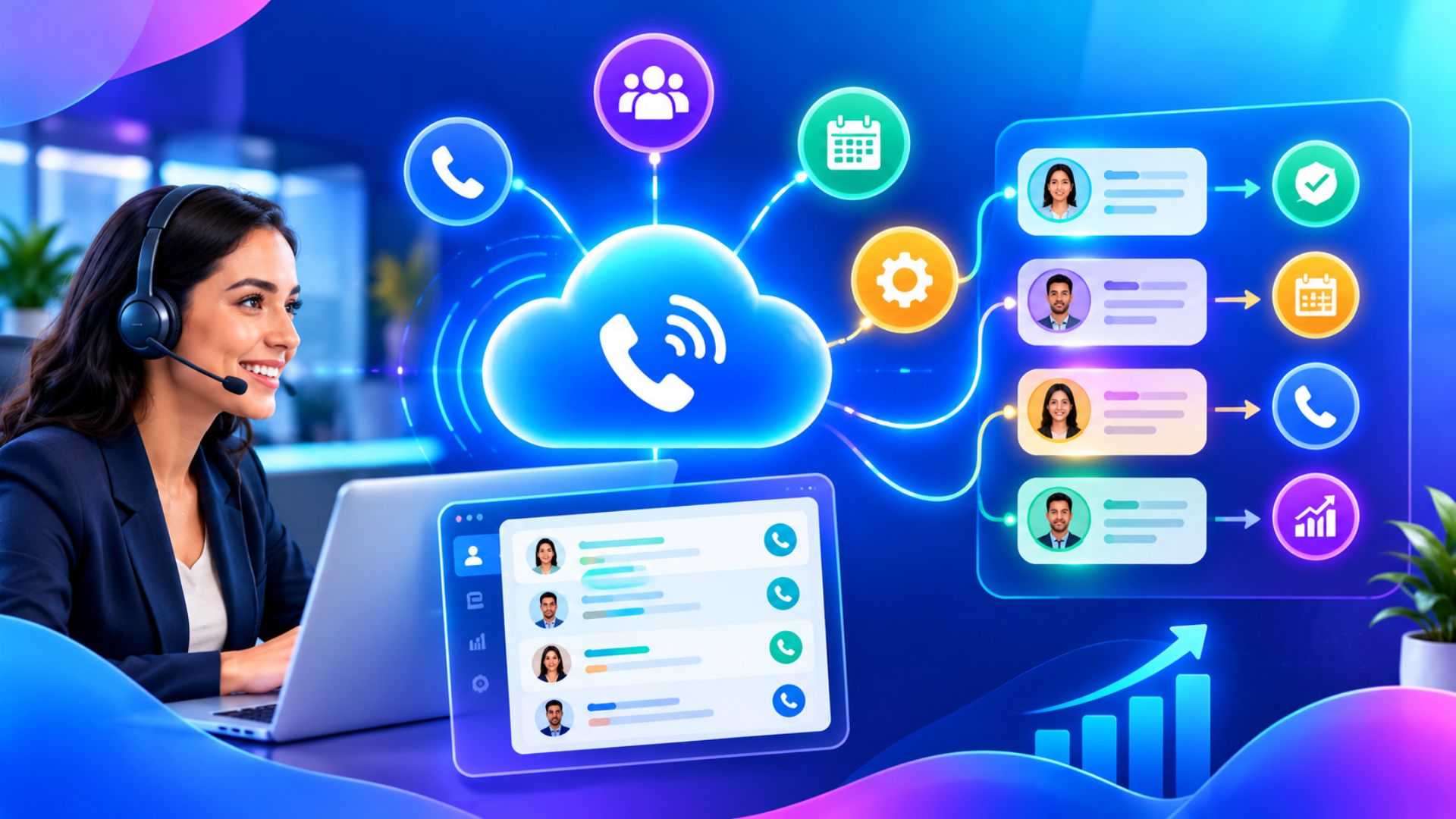
Effective lead management requires businesses to organize prospect information, prioritize opportunities, and maintain timely communication. Cloud calling tools can support this process by connecting calls with customer records and tracking the outcomes of conversations.
A structured ***[lead qualification](https://forums.siliconera.com/threads/10-proven-lead-qualification-strategies-to-boost-sales-conversions.174461/)*** process helps sales teams assess a prospect’s needs, level of interest, budget, and readiness to purchase. Based on these details, employees can determine the appropriate next step, whether that involves scheduling a demonstration, arranging a follow-up, or moving the prospect further through the sales pipeline.
Businesses can improve this workflow by:
* Creating consistent call scripts and qualification criteria.
* Recording relevant prospect details after conversations.
* Scheduling follow-ups based on agreed timelines.
* Reviewing call outcomes to identify common objections.
* Monitoring conversion rates to refine outreach strategies.
* When these practices are combined with automation, teams can reduce administrative effort and make better use of available sales resources.
**How to Choose the Right Cloud Calling Platform**
Selecting a platform requires evaluating both current requirements and future business needs.
Consider these factors before making a decision:
* Essential features: Check for routing, reporting, recording, automation, and integrations.
* Ease of use: Choose a platform employees can learn without extensive training.
* Scalability: Confirm that it can accommodate growing teams and call volumes.
* Security: Review encryption, access permissions, data retention, and privacy controls.
* Integrations: Ensure compatibility with existing CRM and customer service tools.
* Reliability: Evaluate service availability, technical support, and backup arrangements.
* Pricing: Compare subscription fees, usage charges, add-ons, and implementation costs.
* Running a small pilot can help test call quality, usability, reporting accuracy, and integration performance before a full rollout.
**What Challenges Should Businesses Consider?**
Cloud calling can simplify communication infrastructure, but successful implementation requires preparation.
* Internet dependency: Unstable connectivity may affect call quality, so reliable bandwidth and backup connections are important.
* Data protection: Customer conversations may contain sensitive information. Businesses should establish appropriate access controls and retention policies.
* Employee adoption: Training and clear procedures help employees use the platform effectively.
* Integration requirements: Existing business systems may require configuration or additional development. Compatibility should be checked before implementation.
Addressing these challenges early can reduce disruption and support a smoother transition.
Also watch this video – ***[Meet Callified AI | Your AI Sales Team That Never Sleeps](https://youtu.be/cQ8QsephGKI?si=zPMCc1XGaWJJboY2)***
**Conclusion**
A ***[Cloud Call Center](https://callified.ai/blog/the-complete-guide-cloud-call-centers/)*** helps businesses modernize communication by combining internet-based calling, routing, analytics, integrations, and automation in a flexible environment. It can reduce infrastructure requirements, support remote teams, improve performance visibility, and create more organized customer interactions.
The most suitable platform depends on call volume, business objectives, security requirements, existing software, and budget. By assessing these factors and testing essential features before deployment, businesses can build a communication process that supports operational efficiency and sustainable growth.
**Frequently Asked Questions**
Q1. What is a cloud-based call center?
It is an internet-hosted system that enables businesses to manage incoming and outgoing calls without relying entirely on on-site telephone infrastructure.
Q2. Is cloud calling suitable for small businesses?
Yes. Subscription-based plans can give small businesses access to professional calling features without requiring extensive infrastructure investments.
Q3. Is cloud calling secure?
Security depends on the provider’s safeguards and the business’s configuration. Access controls, privacy procedures, encryption, and data retention policies should be evaluated before adoption.
Q4. Can AI improve calling operations?
Yes. Depending on the platform, AI can support automated conversations, routine inquiries, call summaries, reminders, and follow-up workflows.